
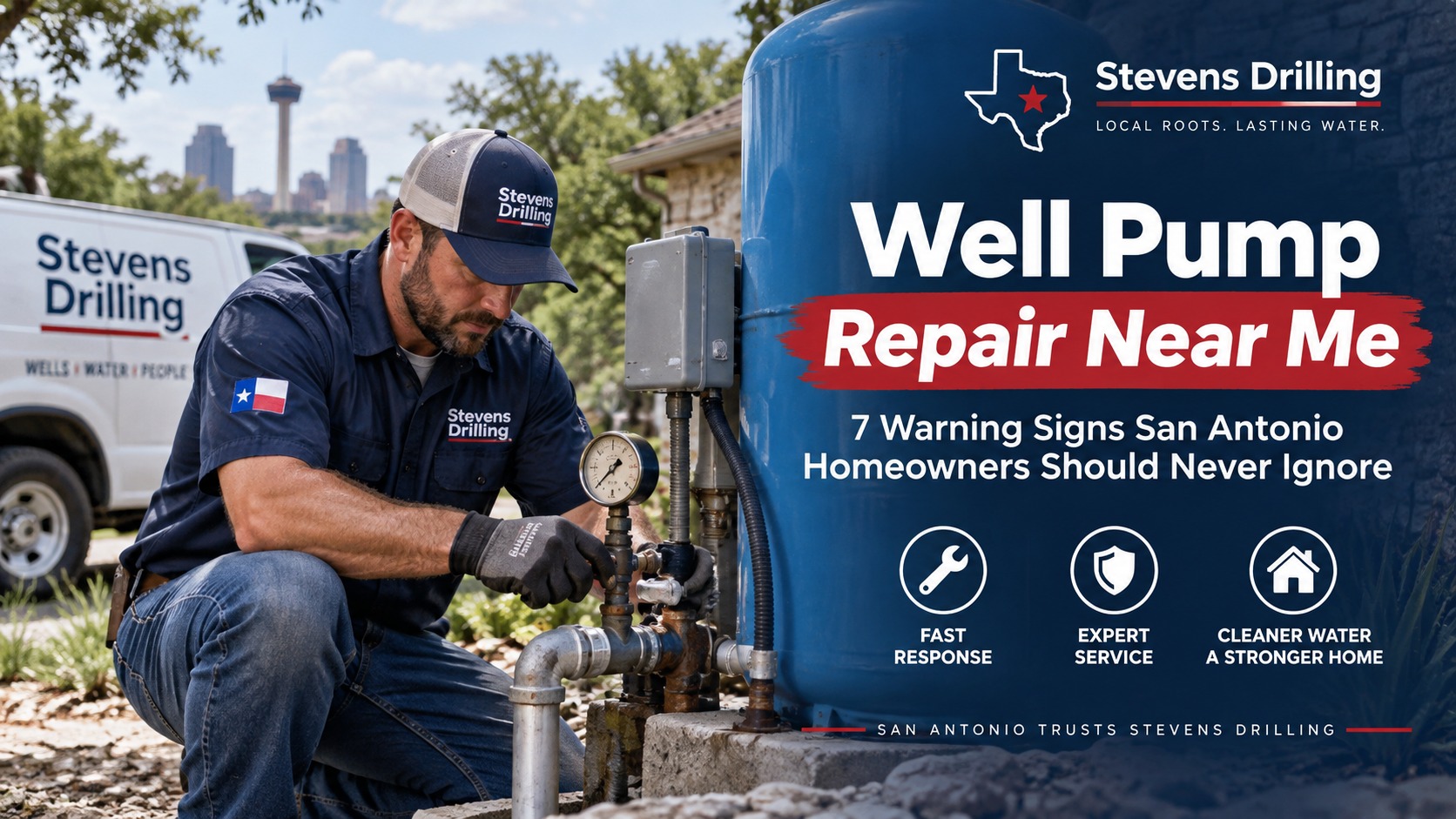
Well Pump Repair Near Me: 7 Warning Signs San Antonio Homeowners Should Never Ignore
For families across the greater San Antonio area – from Boerne to Converse, Helotes to Floresville – a private water well is one of the most valuable features a property can have.
It offers independence from municipal water systems, access to groundwater, and the potential for long-term savings.
But that independence comes with one important responsibility: keeping your well pump in good working order.
Your well pump runs quietly in the background, often for years, without demanding much attention. That’s exactly why so many homeowners are caught off guard when something goes wrong.
The good news is that well pumps often show warning signs before a complete failure occurs.
Knowing what to look for can help you identify problems early, avoid unexpected water outages, and potentially save thousands of dollars in repairs.
Here are seven warning signs that it’s time to search for well pump repair near me and contact a trusted local professional.
1. No Water Coming From the Taps
One of the most obvious signs of a well system problem is turning on a faucet and discovering that no water comes out.
While this can indicate a failed well pump, several other issues can also interrupt your water supply.
Common Causes of a Complete Water Outage
- Tripped Circuit Breaker: The well pump may have lost electrical power.
- Faulty Pressure Switch: The system may not be signaling the pump to operate.
- Pump Motor Failure: An aging or damaged motor may no longer function.
- Electrical Problems: Faulty wiring or control components may interrupt power.
- Low Well Water Levels: Groundwater levels may have dropped below the pump intake.
- Damaged Pump Components: Mechanical problems can prevent water from reaching your home.
What Should You Do First?
Before assuming your pump needs replacement:
- Check whether the water outage affects every faucet.
- Confirm that your property has electricity.
- Check for an obviously tripped circuit breaker.
- Look for visible plumbing leaks.
- Contact a professional if the problem continues.
Important: Avoid repeatedly resetting a breaker that continues to trip. This may indicate an electrical or equipment problem that requires professional attention.
If your home has no water and the cause isn’t immediately clear, contact an experienced well service company.
2. Low or Inconsistent Water Pressure
Does your shower suddenly feel more like a drizzle?
Does your water pressure drop whenever multiple faucets or appliances are running?
Low or inconsistent water pressure is one of the most common warning signs that your well system may not be functioning properly.
What Causes Low Water Pressure in a Well System?
Worn Pump Motor
An aging pump may struggle to deliver the water volume or pressure your household requires.
Failing Pressure Tank
A malfunctioning pressure tank can cause inconsistent pressure and unusual pump cycling.
Declining Groundwater Levels
Periods of drought may affect the amount of water available in your well.
Clogged Plumbing or Filters
Sediment, mineral deposits, and debris can restrict water flow.
Pressure Switch Problems
Faulty controls may prevent your system from maintaining the appropriate pressure range.
When to Schedule Well Pump Repair
If water pressure has noticeably declined or fluctuates throughout the day, it’s worth having your system evaluated.
A professional can inspect your pump, pressure tank, controls, and related plumbing to determine the underlying cause.
Addressing pressure problems early can help prevent unnecessary strain on your well equipment.
3. Your Pump Runs Constantly
A properly functioning conventional well pump system generally cycles on and off as water is used and pressure changes.
If your pump runs continuously when water demand is low, or begins cycling much more frequently than usual, something may be wrong.
Common Reasons a Well Pump Runs Too Often
- Pressure Tank Problems: A waterlogged tank or lost air charge can cause excessive cycling.
- Undetected Water Leaks: Leaks in underground pipes or household plumbing can create constant water demand.
- Worn Pump Components: A deteriorating pump may struggle to maintain system pressure.
- Low Water Supply: Reduced groundwater availability may affect pumping performance.
- Faulty Pressure Controls: Malfunctioning switches can interfere with normal operation.
Why Constant Pump Operation Matters
Excessive pump operation can lead to:
- Increased electricity consumption.
- Premature motor wear.
- Overheating.
- Reduced equipment lifespan.
- Unexpected system failure.
- More expensive repairs.
Some modern variable-speed systems are designed to operate differently, so pump run time alone doesn’t always indicate a problem.
However, a sudden change in your pump’s normal operating pattern should never be ignored.
What Should You Do?
If your pump is running much more often than usual, contact a professional to inspect the system.
Identifying the cause early can help prevent more serious equipment damage.
4. Sputtering or Air in the Water Lines
If water comes out of your faucets in spurts or you notice air bubbles mixed with the water, your well system may be experiencing a problem.
While occasional air after plumbing maintenance can be normal, persistent sputtering may indicate an issue requiring professional evaluation.
Possible Causes of Air in Well Water Lines
Low Well Water Levels
If groundwater levels fall below the pump intake, air may enter the system.
Damaged Drop Pipe
A damaged pipe or connection inside the well can interfere with water delivery and potentially allow air into the system.
Pump Placement Issues
A pump that isn’t positioned appropriately for the well’s water level may experience inconsistent operation.
Plumbing or System Leaks
Certain leaks and pressure problems can also contribute to air entering water lines.
Why This Problem Shouldn’t Be Ignored
A pump operating without adequate water can experience excessive wear or damage.
If air repeatedly enters your plumbing system, the underlying problem may worsen over time.
Professional well pump repair in San Antonio can help identify whether the issue involves your pump, piping, or groundwater supply.
5. Discolored or Cloudy Water
Your well water should not suddenly change color or appearance without investigation.
If you notice sand, sediment, or murky water coming from your taps, it’s important to determine what’s causing the change.
What Different Water Conditions May Indicate
Brown or Reddish Water
May indicate sediment, iron, rust, or changes in water conditions.
Yellow Water
Can be associated with minerals, plumbing corrosion, or other water quality concerns.
Cloudy or Milky Water
May result from trapped air, suspended particles, or changes in water quality.
Sand or Grit in Your Water
Can indicate sediment entering the well system or problems involving the well screen, casing, or pump placement.
How Sediment Can Affect Your Well Pump
Excessive sediment can contribute to:
- Accelerated pump wear.
- Clogged filters.
- Reduced water flow.
- Damage to plumbing fixtures.
- Increased maintenance needs.
- Reduced system efficiency.
Why Water Quality Testing Matters
Discolored water isn’t always caused by a failing pump.
It may also indicate changes in groundwater quality or issues with your home’s plumbing.
Because some water quality problems may pose health risks, consider appropriate water testing before continuing to use the water for drinking or cooking.
If your well water suddenly becomes cloudy, discolored, or contains unusual sediment, schedule a professional inspection promptly.
6. High Electricity Bills With No Explanation
A struggling well pump can consume more electricity than usual, particularly when it runs longer or more frequently than necessary.
If your electric bill has increased without an obvious reason, your well system may be contributing to the problem.
How Well Pump Problems Can Increase Energy Costs
Longer Operating Times
A worn pump may require additional time to maintain the desired pressure.
Frequent Cycling
Pressure tank or control problems can cause repeated pump starts.
Undetected Leaks
Leaks can force the pump to run even when no one is actively using water.
Reduced Pump Efficiency
Mechanical wear or sediment-related issues may affect performance.
Warning Signs to Look For
Pay attention if you notice:
- Higher electricity bills without increased household usage.
- Your pump running more frequently.
- Longer pump operating cycles.
- Inconsistent water pressure.
- Unusual pump or pressure tank noises.
What Can a Professional Check?
An experienced well technician can evaluate:
- Pump operation and efficiency.
- Electrical controls.
- Pressure tank performance.
- Water flow and pressure.
- Potential system leaks.
- Signs of mechanical deterioration.
Identifying an inefficient well system early may help reduce energy waste and prevent more expensive repairs.
7. Your Well Pump Is More Than 10 to 15 Years Old
Like most mechanical equipment, well pumps have a limited lifespan.
Many residential submersible well pumps last approximately 10 to 15 years, although some operate longer depending on installation quality, water conditions, usage, and maintenance.
Factors That Affect Well Pump Lifespan
Water Quality
Sediment, sand, and certain mineral conditions can contribute to equipment wear.
Pump Usage
Systems serving larger households, irrigation, or livestock may experience heavier demand.
Proper Installation
Correct pump sizing, depth, and system configuration support reliable operation.
Pressure Tank Performance
A properly functioning pressure tank helps reduce unnecessary pump cycling.
Maintenance History
Routine inspections can help identify developing issues before equipment failure.
When Should You Consider Replacement?
Pump age alone doesn’t necessarily mean replacement is required.
However, a professional evaluation is especially worthwhile if your pump is approaching the end of its expected lifespan and you’re noticing:
- Frequent repairs.
- Declining water pressure.
- Increased electricity consumption.
- Unusual cycling.
- Intermittent water outages.
- Persistent mechanical problems.
Repair or Replace: Which Makes More Sense?
| Well Pump Repair May Be Best | Well Pump Replacement May Be Best |
|---|---|
| Problem involves a minor component | Pump m |